Ecosystem and Platform Mindse
#Platform #Ecosystem #Design #Planning #Core #Control #Data #Interactio
My idea works in the market?
Bunzee's AI analyzes potential in 1 minute


Designing Businesses with an Ecosystem and Platform Mindset
Traditional service planning has approached products in isolation designing and operating websites, apps, and offline stores independently.
But in 2025, successful services go beyond a single product, they design platforms and ecosystems.
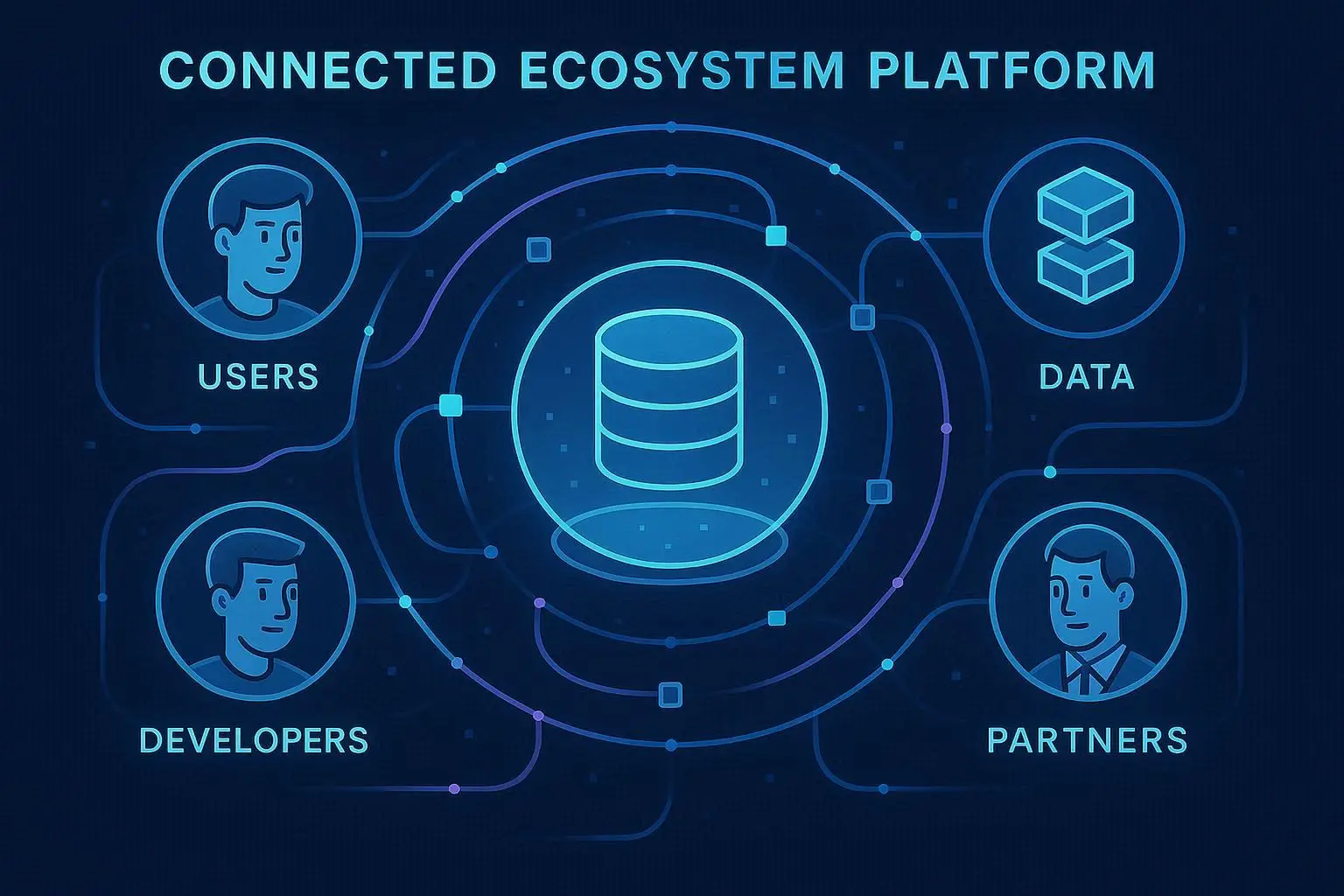
Users, developers, partners, and data are organically connected within a single structure.
Each participant creates and circulates value within the platform.
Competitive advantage stems not from standalone features but from network effects and participant experience.
Why it Matters: Value Expansion & Network Effects
Enhancing Network Effects
The more participants, the higher the overall value.
Example: Users + content creators + developers = exponential platform value.
Sustainability Beyond Product Dependency
Designing around ecosystems rather than a single product helps differentiate from competitors and increases user retention.
Data Circulation & Intelligence
Integrated data across all ecosystem touchpoints enables advanced AI capabilities like personalization, prediction, and recommendation.
Core Principles of Platform Thinking
Participant-Centered Design
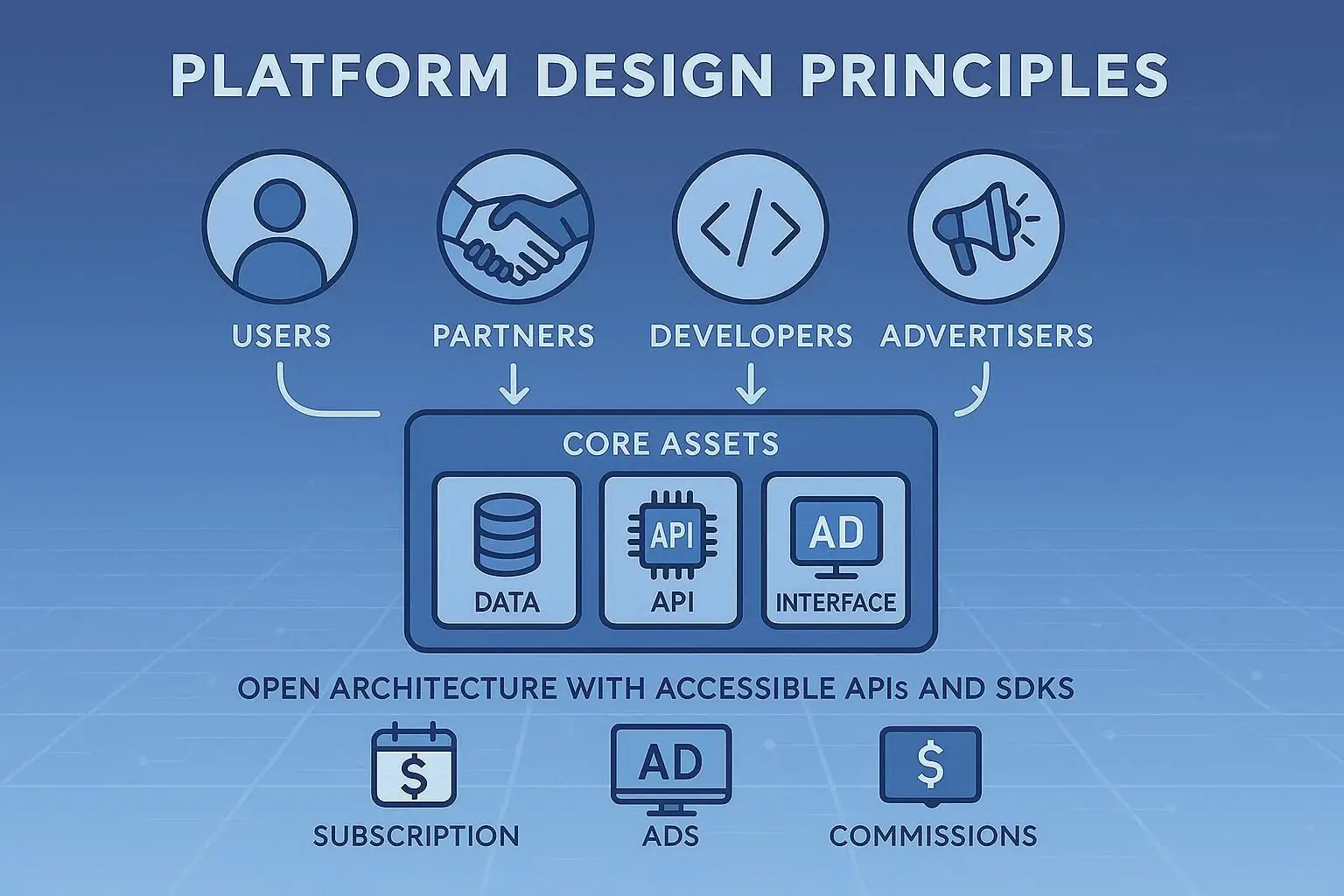
Platforms have diverse stakeholders: users, partners, third-party developers, advertisers, operators.
Understand their roles and motivations to design value exchange structures.
Define Core Assets
Identify the platform’s key assets to control, such as data, APIs, UI, or payment systems.
Decide early what to control vs. share.
Open Architecture
Provide APIs, SDKs, and data access for easy external participation while protecting core competitiveness.
Diversified Revenue Streams
Generate revenue not just from product sales but from the value created by ecosystem participants: fees, subscriptions, advertising, data insights, etc.
Case Studies
Airbnb
Expanded from lodging to experiences, restaurants, and transportation.
Interactions among users, hosts, and service providers form the platform’s core value.
Shopify
Expanded from e-commerce solutions to payments, logistics, marketing, and an app marketplace.
Open APIs allow third-party developers to contribute, increasing platform value as participation grows.
Design Considerations for Service Planners
Ecosystem Journey Mapping
Design journeys not only for individual users but for participant groups (users → partners → affiliates → internal teams).
Ensure value delivery and experience continuity at each touchpoint.
Data Governance
Balance data sharing and protection.
Clearly define trust and rewards when participants provide data.
Scalability & Flexibility
Plan for modular architecture to accommodate future services: APIs, SDKs, plugins.
Network Effect Metrics
Measure ecosystem health via interactions, transactions, content creation—not just MAU/DAU.
Implementation Strategy Examples
Clarify Value Exchange
Users: convenience, benefits, experience
Partners: revenue, data insights, user access
Platform: increased participation → network effect → revenue growth
Core Functions + Open APIs
Core features are platform-provided, while extensions come from third-party participants to expand the ecosystem.
Data-Driven Ecosystem Intelligence
Integrate participant activity data for AI-powered recommendations, predictions, and personalized experiences.
From Product-Centric to Relationship-Centric Design
Service planners now design relationships, not just products:
- Interactions among participants
- Data flow and sharing
- Value circulation
- Viewing the service through a platform and ecosystem lens is essential.
In 2025, a successful service’s competitiveness depends more on who it connects with and how data and experiences circulate than on individual features or UI.